Torn between waking up to the sound of the surf or a wide hillside panorama? In Del Mar, both choices offer rare beauty and very different ownership realities. You want clarity on views, walkability, permits, hazards, and long‑term costs before you commit. This guide compares oceanfront and hillside living in Del Mar so you can buy with confidence. Let’s dive in.
Oceanfront living: what you gain
Oceanfront and bluff‑top properties place you closest to Del Mar’s beaches and village energy. Many are a short walk to Camino Del Mar dining and shops, which makes daily life feel effortless. Direct frontage and unobstructed horizon views are scarce and command a premium. Recent record beachfront sales show how rare coastal frontage can translate to top‑of‑market pricing, including a widely covered closing near $50M in Del Mar that illustrates the scarcity effect (local media coverage of a record sale).
If your priorities are step‑out access to the sand, daily sunset rituals, and a social, walkable lifestyle, oceanfront and bluff‑top homes check the boxes.
Oceanfront risks, permits, and costs
Buying near the water means navigating coastal rules and dynamic conditions. Del Mar operates under a certified Local Coastal Program and active sea‑level‑rise planning that shape setbacks and approvals for near‑shore properties. You can review the city’s planning work and policy context on the Del Mar sea level rise page.
- Coastal permits and scrutiny. Many oceanfront and bluff‑edge projects require a Coastal Development Permit under local rules, with potential state review. The California Coastal Commission’s planning and permitting guidance expects analysis of bluff retreat, wave runup, and future sea‑level scenarios in project filings.
- Seawalls and armoring. Hard shoreline protection is tightly regulated, often discouraged, and approvals are conditional with required mitigation for public beach impacts. Do not assume you can build or expand a seawall to indefinitely protect new development. See the Commission’s overview of shoreline protective devices and sand impacts.
- Active bluff work. The region is reinforcing sections of the Del Mar bluffs to protect the rail corridor. The current SANDAG Del Mar Bluffs Stabilization project runs through 2027 and may affect nearby conditions, construction staging, or access during phases.
- Maintenance and materials. Salt spray accelerates corrosion on fasteners, railings, and mechanical equipment. Budget for more frequent exterior maintenance and consider coastal‑rated materials as recommended in the FEMA Coastal Construction Manual.
- Flood insurance. If a property sits in a FEMA Special Flood Hazard Area, lenders may require flood insurance and coastal V or VE zones can carry higher premiums. Start with a parcel check in FEMA’s Flood Map Service Center, then confirm requirements with your insurer and lender.
Statewide policy also shapes expectations. California’s 2024 sea‑level‑rise guidance now informs local decisions and design lives for coastal projects. You can see the framework in the Ocean Protection Council’s updated guidance.
Hillside living: what you gain
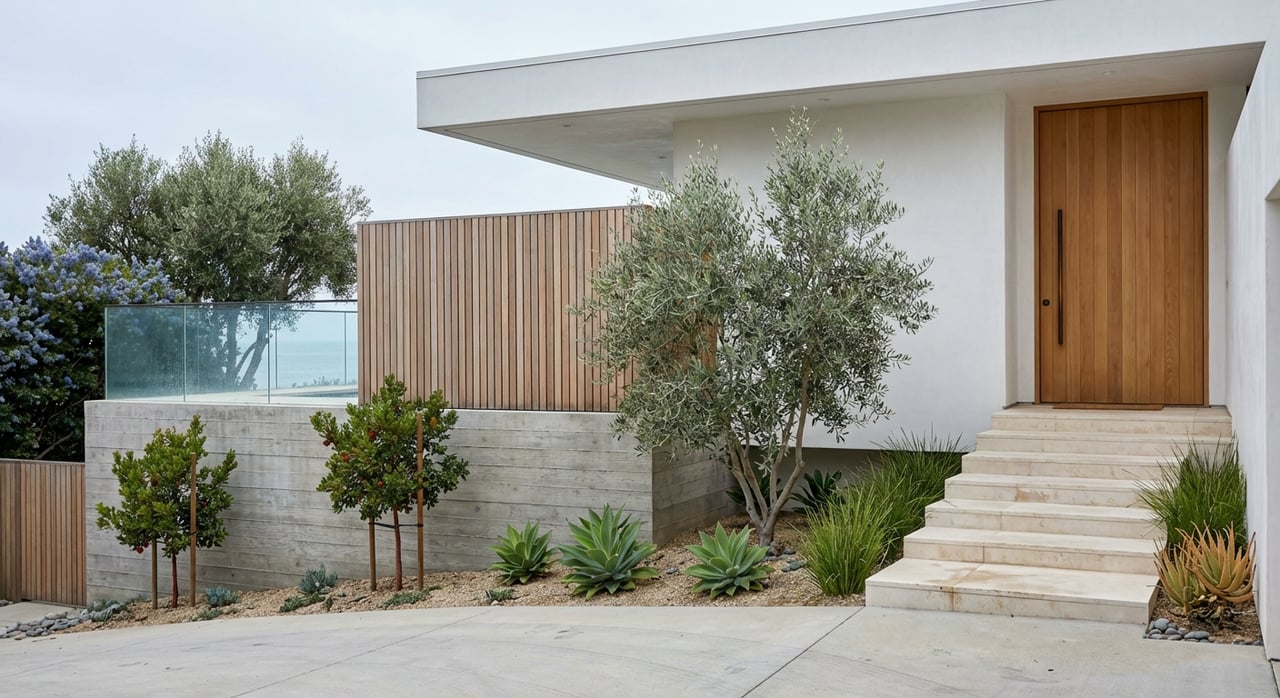
Del Mar’s hillside homes sit on elevated terrain that frames sweeping ocean or canyon vistas while providing more privacy and distance from visitor activity. Lots are often larger or more flexible than narrow bluff‑top parcels, with terraced yards and multi‑level designs that capitalize on elevation.
If you value space, privacy, and panoramic views, hillside living delivers. You may trade some walkability for seclusion, but the daily calm and broader outdoor areas often offset the extra drive or steps.
Hillside risks, permits, and costs
Hillside parcels introduce different technical considerations tied to slope and wildland‑urban interface.
- Geotechnical and slope stability. New builds, additions, major grading, or retaining walls typically require site‑specific geotechnical studies. Local notices and approvals regularly reference conditional slope‑stability measures, which can affect design, foundations, and timelines.
- Wildfire designations. Updated state maps expanded High and Very‑High Fire Hazard Severity Zones in the region. Del Mar applies defensible‑space and Chapter 7A construction rules where applicable. Check parcel status on the city’s Fire Hazard Severity Zone updates.
- Drainage, walls, and vegetation. Hillside ownership often includes routine drainage clearing, vegetation management, and periodic retaining‑wall inspection or repair. Local project notices underscore that slope and wall work can be significant and ongoing; see examples via the city’s NewsFlash updates.
Insurance and disclosures will reflect these realities. Expect questions around earth‑movement exclusions, slope history, and compliance with wildfire‑hardening standards for homes near open space.
Side‑by‑side comparison
| Factor | Oceanfront / Bluff | Hillside |
|---|---|---|
| Views | Immediate water and horizon views with a scarcity premium | Panoramic ocean or canyon vistas from elevation |
| Walkability | Usually closest to beach and village amenities | Often less walkable, more driving or stairs |
| Privacy & Noise | More visitor activity and seasonal events nearby | Greater privacy and distance from beach crowds |
| Permitting | Coastal permits with sea‑level and bluff analyses, potential state appeal | Geotechnical reports, slope/drainage work, possible wildfire standards |
| Maintenance | Accelerated exterior upkeep and corrosion management | Ongoing drainage, retaining‑wall, and vegetation work |
| Insurance & Lending | Possible flood insurance, coastal hazard underwriting | Possible wildfire‑hardening and earth‑movement considerations |
| Long‑term Hazards | Bluff retreat, wave runup, sea‑level rise | Slope stability and wildfire exposure |
What this means for resale and financing
Scarcity supports value on the coast. Direct frontage and top‑tier views remain aspirational and can produce standout sales in strong markets, as seen in recent record transactions. At the same time, buyers, lenders, and insurers are weighing long‑term hazard exposure more explicitly.
- Oceanfront: confirm FEMA zone status, expected flood premiums, and any limitations tied to bluff‑top setbacks or shoreline protection.
- Hillside: review geotechnical history, retaining‑wall conditions, and wildfire‑hardening requirements. Early conversations with your lender and insurer prevent surprises later.
Smart due diligence in Del Mar
Use this checklist before firming up price or removing contingencies.
Parcel‑level checks
- Pull a FEMA flood‑map determination and confirm any Special Flood Hazard Area status with your lender and insurer using the FEMA Flood Map Service Center.
- Review Del Mar’s Local Coastal Program and sea‑level planning to understand coastal policies that could affect bluff or shoreline lots on the city’s sea level rise page.
- For hillside parcels, verify Fire Hazard Severity Zone status on the city’s FHSZ updates page.
Technical studies
- Commission a current topographic survey and a site‑specific geotechnical report. On bluff or steep sites, include bluff‑edge location, retreat projections over the intended design life, and foundation or retaining‑wall recommendations guided by Coastal Commission permitting resources.
- For oceanfront, obtain a coastal hazards assessment that includes wave runup and sea‑level scenarios consistent with the state’s 2024 guidance. Confirm the status and maintainability of any existing shoreline protection.
- For hillside, request drainage and retaining‑wall condition reports. Reference local notices of wall and slope work via the city’s NewsFlash.
Insurance and lender alignment
- Obtain indicative quotes for flood, earth‑movement, and wildfire‑related coverage early. Confirm your lender’s requirements based on FEMA zones or wildfire designations.
Permits and conditions
- Ask the seller for permit history, Coastal Development Permits, and any recorded coastal or public‑access conditions. Understand mitigation obligations ahead of time.
Ownership cost planning
- For oceanfront, budget for faster exterior maintenance cycles and corrosion‑resistant materials aligned with the FEMA Coastal Construction Manual.
- For hillside, budget for drainage maintenance, vegetation management, and potential retaining‑wall repairs.
How to choose: a simple framework
- If you live for daily beach access and a walk‑everywhere lifestyle, focus on oceanfront and bluff‑adjacent homes, then underwrite coastal permitting, maintenance, and potential flood insurance into your long‑term plan.
- If you prioritize privacy, larger outdoor areas, and wide panoramas, target hillside properties and plan for geotechnical diligence, wildfire standards where applicable, and ongoing slope and drainage care.
- In both cases, align your remodel timeline and budget with likely permits and technical studies so your first year of ownership is smooth.
Partner with a concierge advisor
When you are weighing two exceptional but different lifestyles, experienced, senior‑level guidance matters. Our team coordinates coastal and hillside due diligence, connects you with top geotechnical and coastal engineers, and structures offers that account for permits, insurance, and long‑term maintenance. For private inventory and a tailored plan, connect with the Ryan Real Estate Group.
FAQs
What should Del Mar oceanfront buyers know about sea‑level planning?
- Del Mar’s Local Coastal Program and the state’s 2024 sea‑level guidance inform setbacks and approvals, so expect coastal hazard analyses and longer reviews for bluff or near‑shore projects; start by reviewing the city’s sea‑level planning resources.
How do FEMA flood zones affect Del Mar oceanfront financing?
- If a property is in a Special Flood Hazard Area, lenders often require flood insurance and premiums in coastal V or VE zones can be higher; verify parcel status through FEMA’s flood map tool and confirm terms with your lender.
What geotechnical studies are typical for Del Mar hillside homes?
- New builds, significant additions, and retaining‑wall or grading work generally need a site‑specific geotechnical report addressing slope stability, foundations, and drainage, with conditions reflected in local approvals and notices.
Are seawalls an option for bluff properties in Del Mar?
- Hard shoreline armoring is tightly regulated and often discouraged, approvals are conditional, and mitigation is common; do not assume you can add or expand a seawall to protect new development, per the Coastal Commission’s armoring guidance.
How do wildfire maps impact Del Mar hillside buyers?
- Expanded High and Very‑High Fire Hazard Severity Zones trigger defensible‑space and construction standards in applicable areas; check your parcel on the city’s FHSZ updates page and discuss insurance implications early.