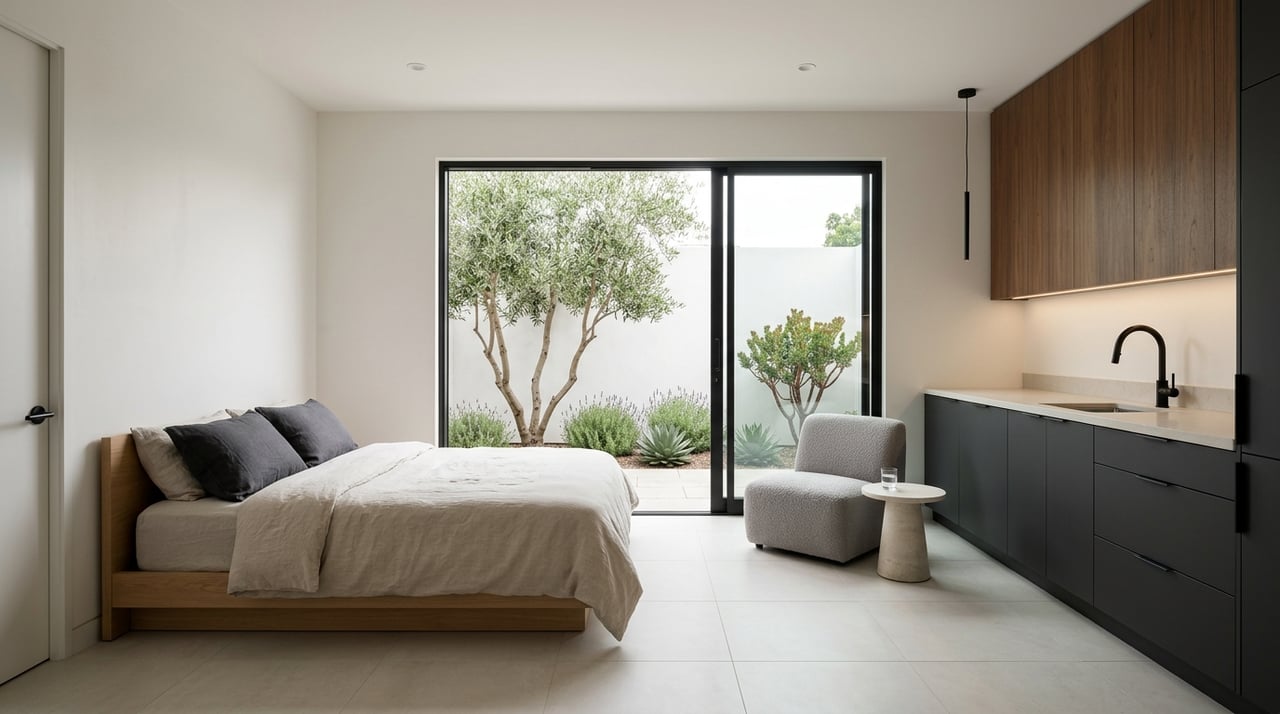
Wondering how to make a Poway home work for parents, adult children, or long-term guests without giving up privacy or future resale appeal? You are not alone. In a city known for detached homes, larger lots, and flexible housing patterns, multigenerational living can be both practical and elegant when the design starts with the right questions. This guide walks you through the layout choices, local rules, and design features that matter most in Poway. Let’s dive in.
Why Poway Fits Multigenerational Living
Poway offers a housing pattern that naturally supports multigenerational planning. According to the City of Poway Community Profile, about 80% of local housing units are single-family dwellings, and the city includes everything from multifamily residences to homes on larger rural parcels.
That matters because many of the most workable solutions happen on the same lot. Instead of searching for a separate housing product, you may be able to create space within the main home, over a garage, or in a backyard structure, depending on your site, zoning, and permit path.
Start With Your Living Goals
Before you think about finishes, appliances, or square footage, define how the home needs to function day to day. A successful multigenerational layout supports both connection and independence.
Ask yourself a few practical questions:
- Do you need fully independent living space or just a private bedroom suite?
- Will the arrangement be long term or temporary?
- Does someone need single-level living?
- Will different household members keep different schedules?
- How important are separate entrances, kitchens, and outdoor areas?
Your answers can help you decide whether you need a simple remodel, a JADU, or a full ADU.
Compare JADUs And ADUs
In Poway, two of the clearest accessory-unit options are the junior accessory dwelling unit and the accessory dwelling unit. While both can support multigenerational living, they serve different needs.
When A JADU Makes Sense
A JADU is typically the more compact in-home option. Poway’s ADU and JADU information guide states that a JADU must be located within a single-family residence and cannot exceed 500 square feet.
This option can work well if you want a private area for a family member while keeping everyone under one roof. It also allows bathroom sharing in some cases if the JADU has interior access, which can simplify planning when space is tight.
When A Full ADU Is Better
A full ADU is generally the better fit when privacy and independent routines matter more. Poway defines an ADU as a separate living unit with complete independent living facilities on a lot with a primary residence, including its own kitchen and bathroom.
If you are planning for long-term flexibility, a full ADU may offer a stronger separation of space. The California Department of Housing and Community Development notes that ADUs can help extended families stay close while maintaining privacy, which is often the core goal in multigenerational design.
Key Poway Rules To Know Early
In Poway, layout decisions should be shaped by local requirements from the beginning. The city encourages early concept planning, which is especially important if you are considering a garage conversion, attached addition, or detached backyard unit.
Several local rules can affect what is possible:
- ADUs and JADUs must have separate entries
- ADUs require separate kitchens and bathrooms
- JADUs may share a bathroom with the main home if they have interior access
- JADUs require owner occupancy
- ADUs do not have an occupancy requirement
- Side and rear setbacks can be as little as four feet in many cases
- Parking is not always required, depending on the property and applicable exemptions
Poway also expects accessory units to remain visually compatible with the main home. The city’s guidance says exterior color, architectural style, siding, windows, and roof materials should generally be similar, and its pre-approved ADU policy notes that plans must match the original home’s roof type and architectural character.
Because state standards continue to evolve, it is wise to confirm current rules before submitting plans. The California ADU handbook includes a January 2026 addendum, which is a reminder to recheck details at permit time.
Design Features That Work Across Generations
The best multigenerational homes are not just divided well. They are easier to use for everyone. Guidance from AARP’s aging-friendly renovation recommendations and HUD points to several features that can improve comfort now and flexibility later.
Prioritize Easy Access
A no-step entry is one of the most useful upgrades you can make. It helps with strollers, groceries, luggage, and mobility needs, all without changing how the home looks or feels.
Wider doorways and lever-style door hardware are also smart additions. These details support easier movement through the home and can often be incorporated during a remodel with minimal disruption.
Plan For Main-Level Living
If possible, include a bedroom or flexible room on the first floor. A full bathroom on the main level can also make the home more adaptable for changing needs over time.
If a bonus room may later become a bedroom, plan for bedroom essentials up front. AARP recommends thinking ahead about emergency egress and smoke detection before walls are closed.
Make Bathrooms Safer And Simpler
Walk-in or curbless showers are especially useful in multigenerational homes. AARP also recommends adding grab-bar blocking behind the walls during construction, even if grab bars are not installed right away.
This kind of planning gives you future flexibility without making the space feel institutional. It is a practical design move that can preserve a clean, high-end finish.
Improve Lighting And Daily Comfort
Better lighting can make a home feel more refined while also improving everyday usability. Focus on entries, hallways, kitchens, and bathrooms where visibility matters most.
HUD notes that universal-design features can often be introduced during remodeling at little or no extra cost and may improve marketability. In other words, smart function can also support long-term value.
Layout Ideas For Poway Homes
Because Poway has so many detached homes, the most practical solutions are often tied to the existing structure or the same lot. The right layout depends on how much privacy you need and what your property can support.
In-Home Suite
An in-home suite can be created by reworking a wing of the house, a first-floor bedroom area, or a bonus-room section. This option often works best when you want closeness, shared meals, and simpler circulation.
It can also be one of the least disruptive ways to adapt a home. The tradeoff is that privacy may be more limited unless you can add a separate entrance and sound separation.
Garage Conversion Or Attached Unit
A garage conversion or attached ADU can create more independence while still feeling integrated with the main home. In many Poway neighborhoods, this can be a natural fit if the architecture and materials are handled carefully.
This option often balances privacy, cost, and lot efficiency. As always, feasibility depends on zoning, setbacks, utility needs, and permit review.
Detached Backyard ADU
A detached ADU can offer the highest level of privacy for a family member who wants independent routines. It can also create a strong sense of personal space while keeping everyone nearby.
In Poway, this option may be more realistic on larger parcels, though each site should be evaluated individually. Access, grading, drainage, and fire-zone requirements can all shape what is possible.
Questions To Ask Before You Design
In Poway, early due diligence matters more than cosmetic planning. Before committing to a layout, ask your architect, planner, or permit professional to review the property at the site level.
Useful questions include:
- What is the parcel’s zoning in PowGIS and the city FAQ tools?
- Is the property located in a Very High Fire Hazard Severity Zone or High Fire Hazard Severity Zone?
- What setback, parking, and entry standards apply to this specific lot?
- Does the property qualify for any parking exemption under the city’s ADU guidance?
- Will grading, drainage, vegetation clearing, or utility work trigger additional review under Poway’s grading permit requirements?
- Could a pre-approved ADU plan fit the site and existing architecture?
These questions can save you time and help you avoid designing something that looks appealing on paper but proves difficult to permit.
Design For Resale Too
A multigenerational upgrade should work for your household today while still appealing to future buyers. In Poway, the strongest projects usually feel like thoughtful home improvements, not one-off alterations.
That means keeping the exterior cohesive, maintaining architectural compatibility, and choosing layouts that can serve more than one purpose over time. A private suite might later function as guest quarters, a home office, or long-term flex space.
That flexibility matters. HCD highlights the privacy benefits of ADUs for extended families, and HUD notes that universal-design improvements can improve a home’s usability and marketability. In a market where visual consistency is also part of the local standard, matching the addition to the original home can support both everyday function and curb appeal.
Final Thoughts On Planning In Poway
Designing for multigenerational living in Poway is rarely about adding the most space. It is about creating the right kind of space. The most successful homes balance privacy, accessibility, architectural consistency, and long-term flexibility from the start.
If you are considering a purchase, remodel, or property with redevelopment potential, a clear strategy can help you evaluate what is possible before you invest time and capital. For tailored guidance on homes, land potential, and design-minded opportunities in Poway and greater San Diego, connect with Ryan Real Estate Group.
FAQs
What is the difference between a JADU and an ADU in Poway?
- A JADU is a smaller unit located within a single-family home and cannot exceed 500 square feet, while an ADU is a separate living unit on the same lot with full independent living facilities, including its own kitchen and bathroom.
Are parking spaces always required for a Poway ADU?
- No. Poway’s ADU guidance says parking is not always required, and some properties may qualify for exemptions depending on the site and applicable standards.
Can a Poway JADU share a bathroom with the main house?
- Yes. According to Poway’s rules, a JADU may share a bathroom with the main home if the JADU has interior access.
What design features help a multigenerational Poway home age well?
- Helpful features include at least one no-step entry, wider doorways, lever-style hardware, better lighting, a main-level bedroom, a full bathroom on the main floor, and a walk-in or curbless shower.
Why should Poway homeowners check fire-zone and grading issues early?
- Fire-zone location, grading, drainage, vegetation clearing, and utility work can all affect project design, permitting, and cost, so they should be reviewed before finalizing plans.
Do Poway accessory units need to match the main house?
- Generally, yes. Poway expects accessory units to be similar and compatible with the main home in exterior color, architectural style, windows, siding, and roof materials.