If you want a Rancho Santa Fe estate to support modern compound living, design alone is not enough. You need a plan that respects the land, fits the community’s review standards, and gives your property real long-term flexibility. Whether you are creating space for extended family, guests, work, or wellness, the right approach can turn a large estate into a cohesive, private retreat. Let’s dive in.
Why compound living fits Rancho Santa Fe
Rancho Santa Fe has a long history of estate planning, and that history still shapes what gets built today. The community sits within the San Dieguito Community Plan Area, which San Diego County describes as a low-density estate residential area.
That estate character is reinforced by the Rancho Santa Fe Association’s design review process. The community’s planning tradition dates back to the 1928 Protective Covenant, and the Art Jury continues to review projects to preserve community character and maintain the high artistic standard expected under that covenant.
For you as an owner, that means a compound cannot feel pieced together. Detached spaces need to read as parts of one estate, not as unrelated structures scattered across a large lot.
Start with one estate story
The strongest compound estates usually begin with a simple idea: every structure should support one unified vision. In Rancho Santa Fe, the Association’s residential design guidelines emphasize preserving natural landforms, keeping new construction visually restrained, and subordinating mass and scale to the landscape.
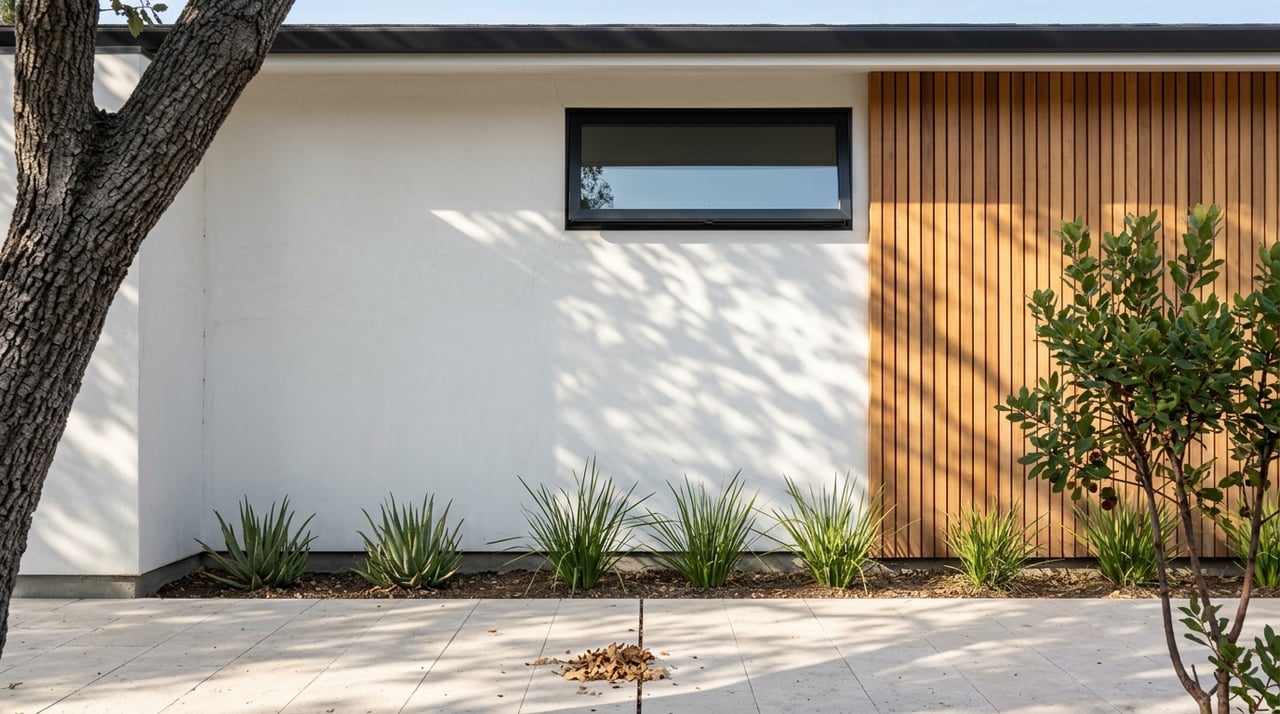
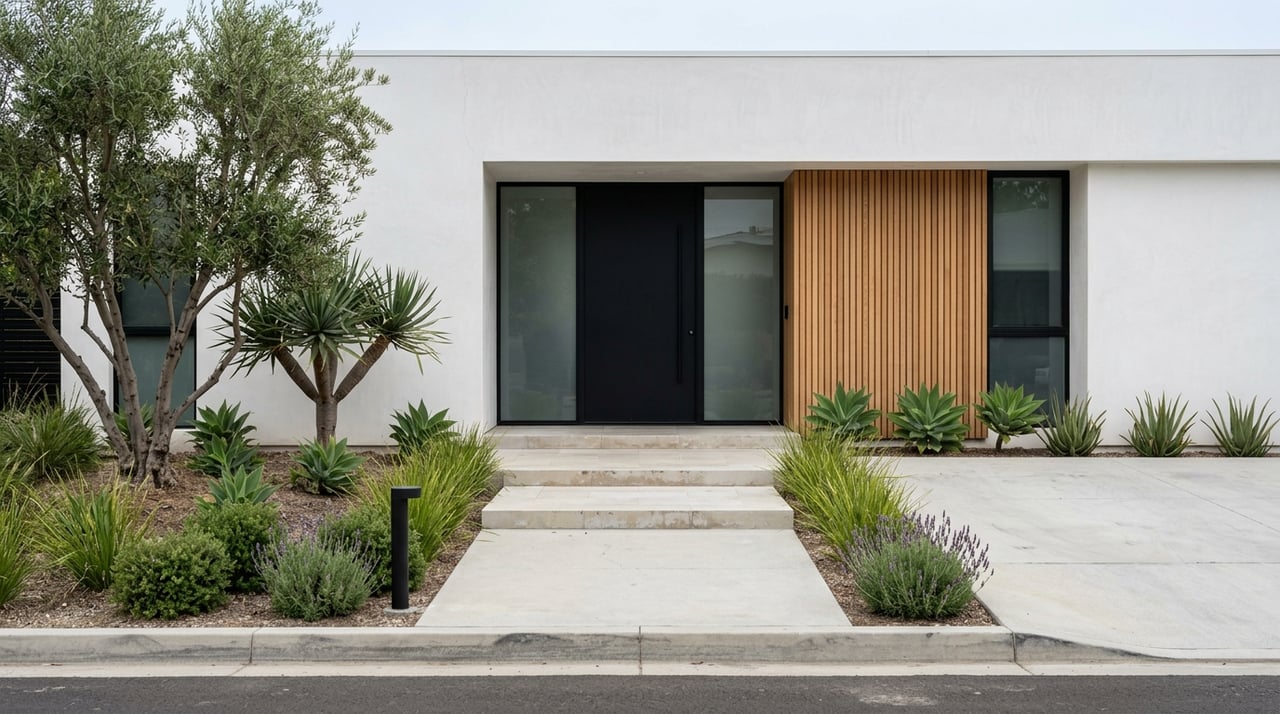
That guidance matters. If you are planning a guest casita, detached office, wellness pavilion, or pool house, each element should feel visually connected through architecture, materials, rooflines, circulation, and landscaping.
A modern compound can absolutely feel current while still respecting Rancho Santa Fe’s design expectations. The key is restraint. Instead of designing separate buildings as statement pieces, think in terms of a layered estate composition.
What cohesion looks like in practice
A cohesive compound often includes:
- A clear main residence that remains the visual anchor
- Detached spaces placed with purpose rather than symmetry for its own sake
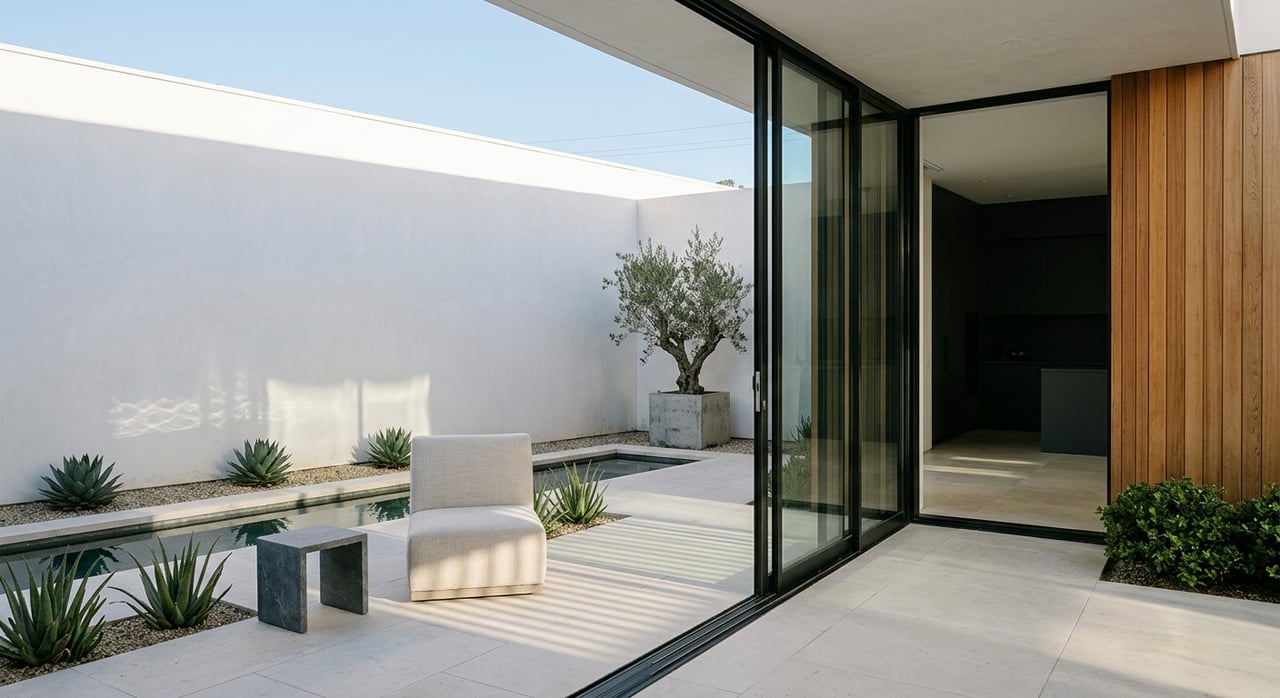
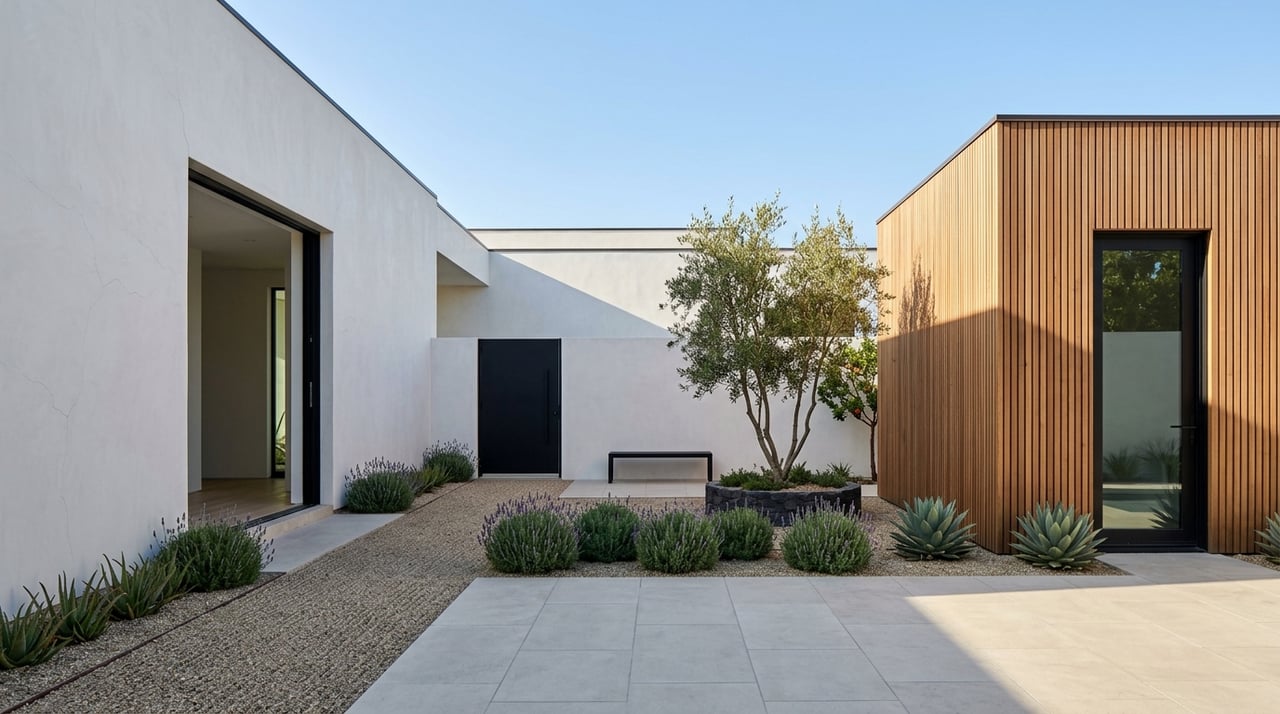
- Landscape design that ties buildings together with paths, courtyards, and garden rooms
- Consistent exterior materials and detailing
- Massing that stays secondary to the site and topography
This approach does more than help with approvals. It also creates the calm, private feel that most buyers expect from a Rancho Santa Fe estate.
Design for the way families live now
Modern compound living is about flexibility as much as luxury. Recent buyer behavior supports that shift. In 2024, 14% of recent buyers purchased a multi-generational home, with common reasons including caring for aging parents, adult children moving back home, and cost savings.
For an estate in Rancho Santa Fe, that trend supports thoughtful spaces that allow people to live together without sacrificing privacy. A detached guest casita, a long-stay suite, or a separate pavilion for work and wellness can make an estate feel far more functional across different stages of life.
Smart program elements for modern use
Today’s most durable estate compounds often include a mix of uses like:
- Guest casitas for extended stays
- Private suites for family members or caregivers
- Detached offices or studios
- Fitness and wellness rooms
- Outdoor shower areas and spa-support spaces
- Garden paths, quiet courtyards, or sensory landscape zones
The goal is not to overprogram the property. It is to create spaces that can evolve as your needs change.
Understand the approval paths early
In Rancho Santa Fe, compound projects often involve more than one layer of approval. That is one of the biggest reasons early planning matters.
For properties in unincorporated San Diego County, the County Building Division reviews permits against California Building Standards, county amendments, the grading ordinance, the zoning ordinance, the consolidated fire code, and the wildland-urban interface code. County permit conditions can also include Fire District Approval, Flood Control, Septic Review, and Driveway Review.
Within the Rancho Santa Fe Covenant, there is also private review through the Association and Art Jury. Historically, the covenant allows reasonable quarters for servants or guests, including a separate detached accessory building or gate lodge, but written Association and Art Jury approval is required.
Why this matters for compound planning
A compound-style estate is usually closer to a coordinated redevelopment than a simple addition. You may be evaluating building placement, access, landscape strategy, fire safety, grading, and utility relationships at the same time.
That is why strong estate planning starts with a site-wide vision instead of designing one detached building at a time. When each move is coordinated early, the result is usually cleaner, more efficient, and easier to present.
Know the ADU and accessory rules
If you are considering a detached living space, it helps to understand what San Diego County allows. The County states that an ADU must be on the same lot as the main house and may be detached, attached, or created through conversion.
For size, a detached ADU in unincorporated San Diego County can be up to 1,200 square feet. A JADU must be located inside an existing or proposed house and is capped at 500 square feet.
The County also provides nearly complete detached ADU plans, which can be useful for early budgeting and feasibility conversations. Even so, in Rancho Santa Fe, county compliance is only part of the picture if your property is within the Covenant.
A key Rancho Santa Fe consideration
The covenant historically allows guest or servant quarters in detached accessory buildings with approval, but it also states those spaces are not to be rented to outsiders. If you are thinking about a compound, that distinction matters.
In other words, a detached building may support estate living, guest use, or household flexibility, but your design intent should align with both county rules and Rancho Santa Fe’s private review framework.
Give detached spaces true purpose
A few years ago, many owners created improvised work areas inside closets or spare corners. That trend is fading. Zillow’s 2024 trend report found that the “cloffice” appeared in 54% fewer listings, while “zoom rooms” and “office sheds” also declined.
That points to a clearer design lesson for Rancho Santa Fe estates. If you want flexible value and better resale appeal, a purpose-built detached office or studio is often more durable than a temporary conversion.
The same is true for wellness spaces. The 2024 trend report showed growing attention to sensory gardens, pathways, and cold plunge pools, which supports spa pavilions, meditation rooms, fitness rooms, and layered outdoor wellness areas on larger estates.
The best estate amenities stay adaptable
The most valuable detached spaces are usually the ones that can serve more than one role over time. A guest house can become a caregiver suite. A studio can function as an office, art room, or private retreat.
That flexibility matters for daily life, and it matters for resale. A future buyer will often respond better to a space that can shift with changing needs than to one built for a very narrow lifestyle.
Plan privacy through layout, not just distance
Large lots do not automatically create privacy. The best compounds use site planning to shape how people move, gather, and retreat.
In Rancho Santa Fe, privacy tends to work best when architecture, landscape, and circulation all reinforce the same story. That may mean using garden walls, layered planting, courtyard sequencing, or offset building placement to create separation without making the estate feel fragmented.
A guest casita should feel welcoming but independent. A detached office should be close enough for convenience but separate enough to create focus. A wellness pavilion should feel tucked away and calm without becoming visually disconnected from the main residence.
Build wildfire resilience into every structure
Wildfire planning is not an optional layer in Rancho Santa Fe. It is a core part of site design.
San Diego County says defensible space means clearing combustible vegetation within a 100-foot radius of a structure. Fire-resistant, irrigated landscaping can be used in the first 50 feet, while the outer 50 feet should retain more natural vegetation with appropriate management.
The Rancho Santa Fe Fire Protection District also emphasizes ember exposure and the importance of fire-resistant construction within the first 5 feet of a structure. That is especially important for compound estates with multiple detached buildings.
What this means for a compound layout
Each detached element should be treated as a real building envelope. A guest casita, cabana, office, or wellness room is not just an amenity structure. It needs thoughtful siting, defensible space, and appropriate hardscape and landscape transitions around it.
The Fire District’s hazard-abatement program is year-round, and residents are expected to maintain properties to applicable standards. For estate owners, that makes resilience part of both design and ongoing stewardship.
Think about resale from day one
A beautifully designed compound should serve your life now, but it should also make sense to the next buyer. In this market segment, flexibility usually outperforms spaces that are too personalized.
San Diego County’s current ADU framework, along with its March 2026 ordinance amendment allowing separate ADU sale in unincorporated communities through condominium conversion, shows that detached units may hold meaningful long-term value. That does not mean every estate should be designed around future separation, but it does support the value of detached spaces with lasting utility.
If you are building or repositioning an estate, the smartest strategy is often to create spaces that feel elegant, coherent, and adaptable. That is easier to market, easier to explain, and often more compelling to discerning buyers.
Why estate advisory matters
Compound living in Rancho Santa Fe is never just about adding square footage. It is about aligning design ambition with estate character, private review, county requirements, and future marketability.
If you are buying, selling, or repositioning a Rancho Santa Fe estate, this is where experienced guidance can make a measurable difference. The right advisory team can help you evaluate whether a property’s land, layout, and existing improvements support a true compound vision before you commit time and capital.
At the luxury level, thoughtful planning also shapes how a property is presented. A cohesive estate story, clear use strategy, and strong design logic can help buyers understand not just what a property is, but what it can become.
If you are considering a Rancho Santa Fe estate with compound potential, or preparing one for sale, Ryan Real Estate Group offers discreet, concierge-level guidance for high-value properties, redevelopment strategy, and design-driven positioning.
FAQs
What is compound living in Rancho Santa Fe?
- Compound living in Rancho Santa Fe usually means designing an estate with a main residence and thoughtfully integrated detached spaces such as guest casitas, offices, or wellness pavilions that function as one cohesive property.
Can you build a detached guest casita in Rancho Santa Fe?
- In many cases, a detached accessory structure may be possible, but projects in unincorporated San Diego County must follow county permitting rules, and properties within the Rancho Santa Fe Covenant also require Association and Art Jury approval.
How large can a detached ADU be in unincorporated San Diego County?
- San Diego County states that a detached ADU can be up to 1,200 square feet, while a JADU must be within an existing or proposed house and is capped at 500 square feet.
Can a detached guest house in Rancho Santa Fe be rented out?
- The Rancho Santa Fe Protective Covenant historically allows certain guest or servant quarters with approval, but it states those spaces are not to be rented to outsiders.
Why is wildfire planning important for Rancho Santa Fe estates?
- Wildfire planning is important because San Diego County requires defensible space within 100 feet of a structure, and the Rancho Santa Fe Fire Protection District emphasizes ember-resistant design and fire-resistant construction near structures.
What features make a Rancho Santa Fe compound more appealing at resale?
- Flexible spaces tend to support resale better than highly specific ones, so detached buildings that can serve as guest suites, offices, caregiver quarters, or studios are often easier for future buyers to understand and value.